- H.B. Road, Ranchi, Jharkhand 834001
- Emergency Number: 9117100100


Weight Loss Clinic
Weight Loss Treatment in Ranchi
Bariatric surgery is a medical procedure designed to help people with severe obesity lose weight and improve obesity-related health problems. It works by making changes to the stomach and sometimes the digestive tract, which reduces food intake and alters how the body absorbs calories. Common types include Sleeve gastrectomy, where a large portion of the stomach is removed, and Gastric bypass, where the stomach and intestines are rearranged to limit calorie absorption. This surgery is usually recommended for patients who have not achieved results through diet, exercise, or medication and who may also suffer from conditions such as Type 2 diabetes, high blood pressure, or sleep apnea. While bariatric surgery can lead to significant and long-term weight loss, it is not an instant cure. Success depends on lifelong changes in diet, physical activity, and regular medical follow-up.
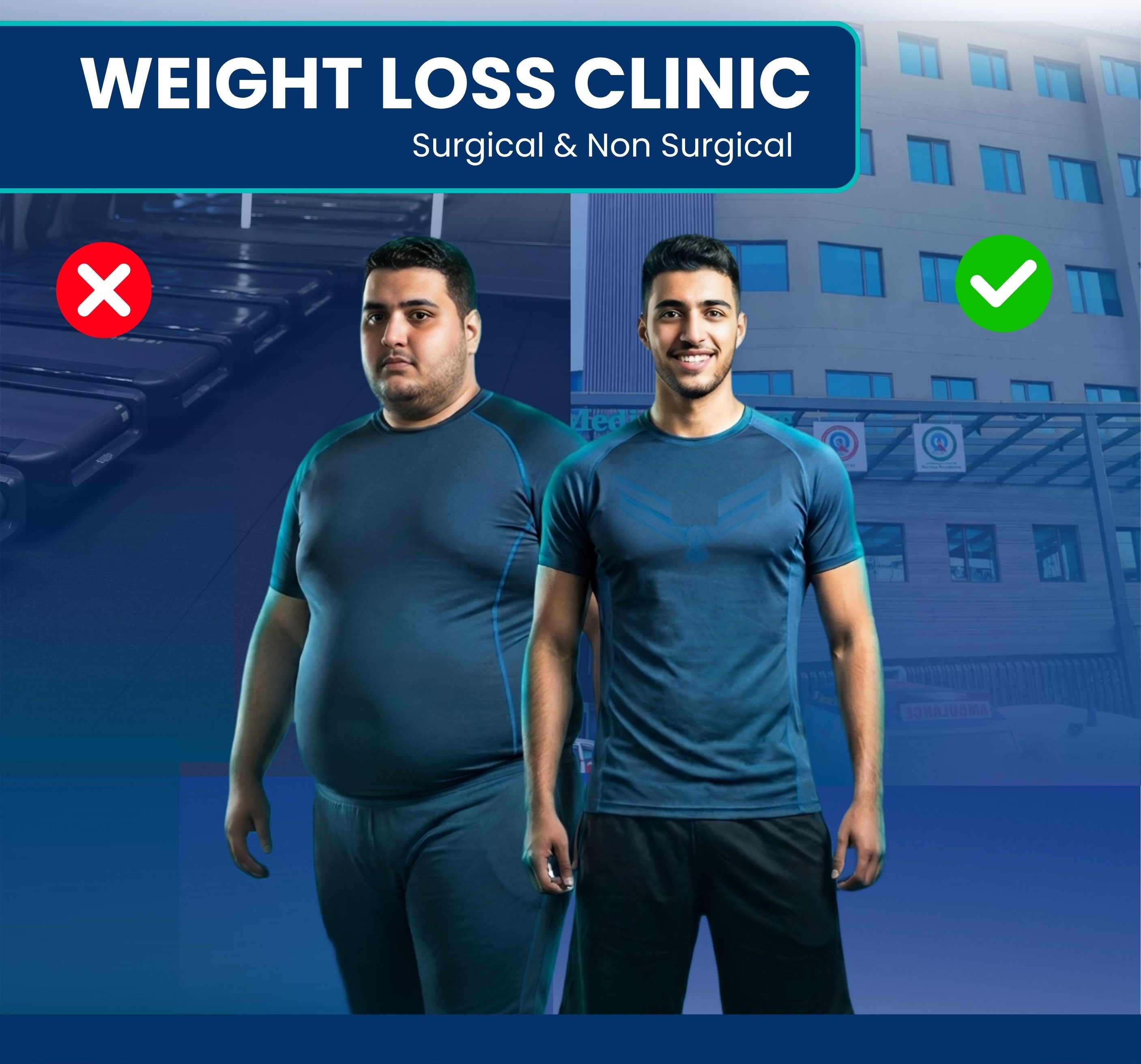
Surgical Weight Loss Treatment - Bariatric Surgery
Sleeve Gastrectomy-Reduces stomach size in order to curb appetite and limit food intake. By altering the digestive tract, the Gastric Bypass (Roux-en-Y) facilitates quick and long-lasting weight loss.
Small Gastric Bypass- Excellent results from a shorter, technically easier bypass procedure.
Bariatric Surgery Revision-For patients who require modifications after prior procedures.
Non Surgical Weight Loss Treatments
GLP-1 Injections (Wegovy® / Semaglutide) are one of the non-surgical weight loss treatments prevailing now a days.
Mounjaro® / Tirzepatide: GLP-1 + GIP Dual Agonist
Intragastric Balloon (Endoscopic Balloon Placement)
Allurion Balloon (No anesthesia, no endoscopy)
Medical Nutrition Therapy (MNT)
Medications that require a prescription (oral and injectable)
Therapy for behavior and lifestyle